
Transforming Operations With Analytics And AI-Driven Decision Intelligence
In today’s dynamic and wide world business environment, Operations department is expected to deliver accurate quality of work with efficiency with cost reductions. Earlier the decisions were made based on the manual systems and as per the experiences which are not enough. Artificial Intelligence (AI) transforms operations by using quicker and smarter data driven decisions. We are not stating that the job roles in the organization need to be replaced by AI as it is simply here to simplify everyone’s lives.
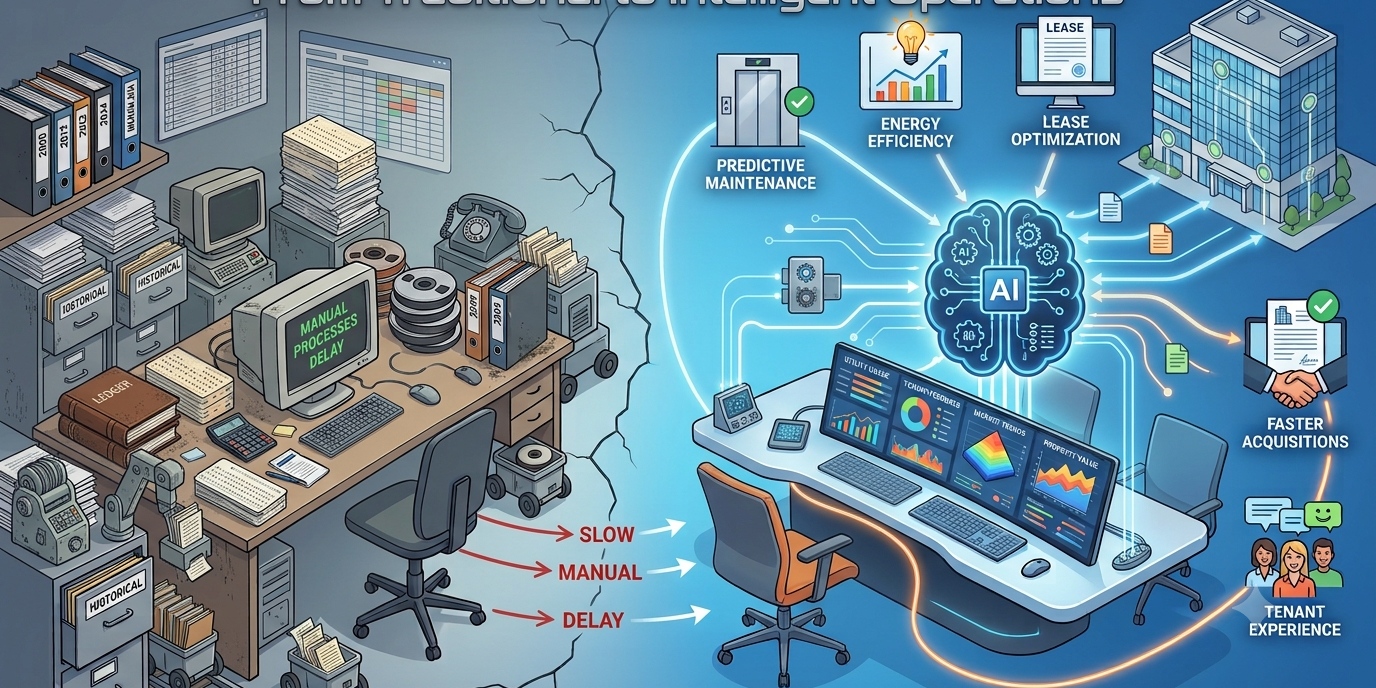
From Traditional to Intelligent Operations
Earlier, operational decisions were largely taken on reactions, reflections and highly relying on the historical (saved data) human assumptions and mind. This often leads to delay and less Accuracy in the data. AI will change the large amount of data into more accuracy in less time with much more information and efficiency.
Analytics assist and enhance operational performance by providing actionable visions through structured data. It supports clearer navigation of complex processes while encouraging data driven in decision making. Here are several approaches where analytics and AI support operations in decision making:
-
-
Data Consolidation and Integration:
Advanced analytics align segregated data from different systems into unified datasets which are accessible via APIs (Application Programming Interface) through which different company applications communicate with each other and convert raw data into business information which is helpful to end users. For instance, lease renewals can merge expiration data with customer service metrics and external performance variables to predict renewal probabilities. This reduces reactive decision-making and promotes strategic intuition.
-
Decision Optimization and Increased Efficiency:
“Agentic” AI frameworks transform passive data sources into active decision-making engine. AI agents can classify, summarize, and process data to trigger actions, such as profiling deals and analyzing lease documents, lease abstracts, renewal administration, leads management and identifying variances in financial reports which is very much needed in CRE firms where it will reduce the manual workloads to rectify repetitively performing task whereas humans can focus more on where only humans skill actually required. Analytics enhances operations effectiveness by automating data intake, processing, and analysis, while human oversight assures accuracy and critical judgement.
-
Enhanced Visualization for Clarity and cost optimization:
Analytics platforms provide dynamic visualization capabilities, converting raw data into modified charts and dashboards. This enables teams to review and interact with complex datasets on-the-fly, promoting immediate and informed decision-making.AI helps determine cost which is not fully utilized space or needs high maintenance. Property managers can Improve energy usage, reduce and miscellaneous expenses to improve the revenue of the building.
-
Scalability:
In Today’s time we all know that real estate portfolio is growing rapidly, so maintaining and managing properties is tough at a same time, AI will make it easy by handling large amount of Information from too many locations with consistency of continuous success and profit.
-
Real-World Applications in Commercial Real Estate:
-
Property Evaluation: AI will gather necessary information from different sources and from the markets to determine accurate property values.
-
Tenant Experience: AI will help fetching response and requests from tenant in timely manner.
-
Facility Management: Expected maintenance will help solve the problem before it breaks down and in less time. For example: it will help to maintain the equipment’s like (HVAC or elevators) and identify potential issues in very little time.
-
-
Challenges to Consider While AI offers significant advantages, organizations must address
-
Data Quality: AI requires accurate and reliable information to make work easy and efficient.
-
Integration: The current property management systems must be AI compatible
-
Skill Gaps: Team-mates will need more training on how to use AI in day-to-day life.
-
Governance: Responsible or Transparent AI use is suggested.
-
-
-
-
Predictive and Prescriptive Insights:
Operations are highly relied on analytics to develop scenarios, assess strategies, and evaluate outcomes. AI will be maintaining the future view for vacant space, rental charges, demand for affordable rents and more accuracy for maintenance. CRE companies expect if the buildings may suffer with less occupancy, then AI will come in and take charge for suggesting solutions accordingly.
-
Human-in-the-Loop Engagement:
Even with AI managing many tasks, human involvement remains necessary. Keeping human in the loop determines that information or prompt provided to AI is accurate and that users can review, approve, or make adjustment as needed. For example, AI may initiate approvals for complex budgets while managers confirm key steps and can become mediator when necessary.
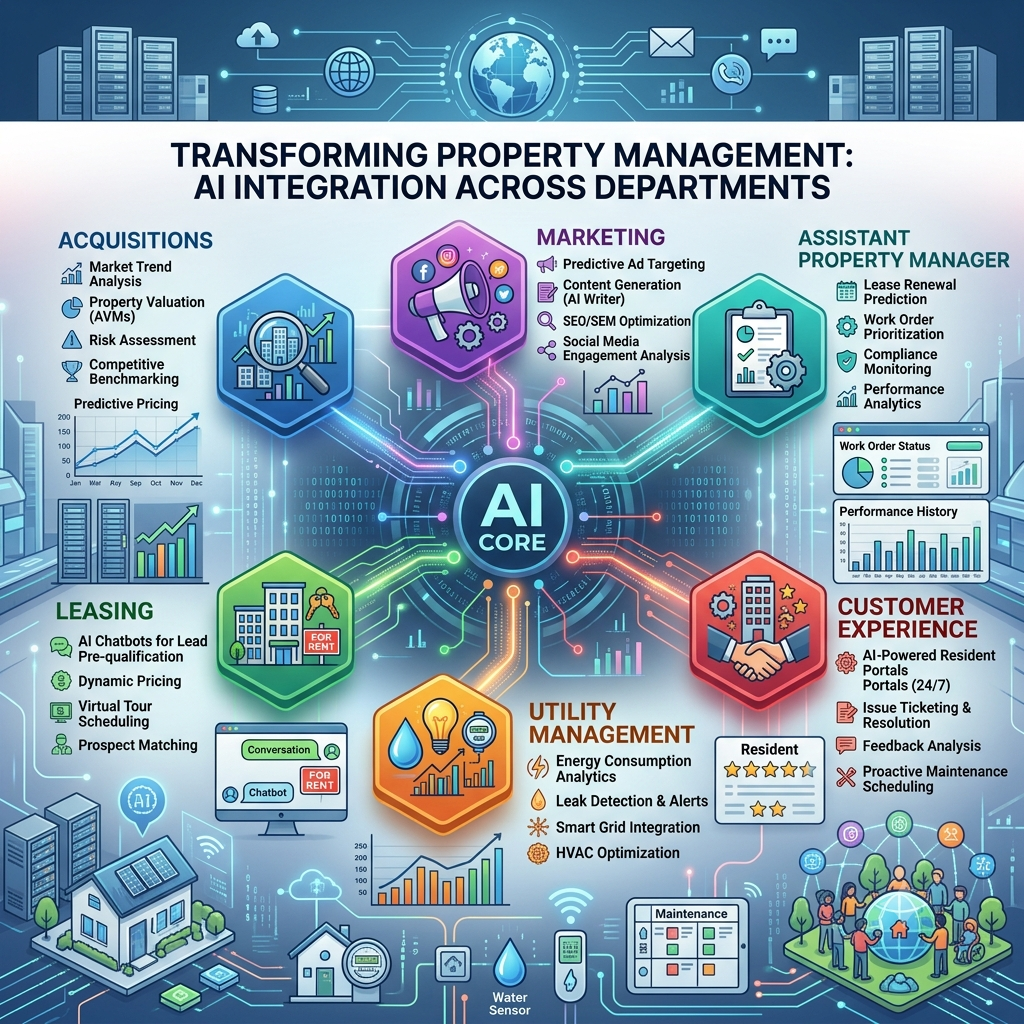
Use of AI in different departments:
Acquisitions: The Future Is Finding Good Deals Sooner:
Acquisitions team invest considerable time and energy in researching and gathering required information including market and comparable information, profiling, evaluating deals and collaborating with brokers. But even the fastest teams often find themselves reacting too late to capitalize on an opportunity before it is too late. When equipped with AI, the Acquisitions team can analyze market trends, comparable rates, past sales, rule of thumb models, and economic signals to move faster on and close on opportunities before the competition.
Marketing & Leasing: Cut Through the Noise to Reach the Right People:
Marketing and Leasing teams face the constant challenge of reaching the right prospects at the right time with the right pricing. AI is the tool that can highlight those promising prospects likely to move and tell you how and when to reach them for better outcomes. Often, teams stop guessing where demand exists and the value of its efforts. AI helps a team shift from broadcasting messages to the broad market to focusing efforts where value lies and demand is proven.
Assistant Property Manager: Streamlining Daily Tasks to Focus More on Property:
Invoices, vendor management, work orders, tracking outstanding requests – there are a myriad of daily tasks assistant property managers must take care to ensure everything runs smoothly. AI automates several of these tasks, by validating invoices, highlighting variances and unusual items, routing approvals, and scheduling routine maintenance. That frees up the PM to focus on property and performance.
Utility Management: Proactive control over expenses and waste:
Managing expenses and consumption levels can be a complicated process if all reports only happen after month-end. AI along with the latest smart sensors can provide real time monitoring of electricity, gas and water consumption and usage trends. AI also monitors and detects abnormal usage patterns, equipment malfunctions and helps to prevent waste.
Customer Experience: Better, faster, support for customers:
Customers today have a high demand for rapid and quality responses and assistance. AI can help by responding to frequent questions quickly, by managing a comprehensive history for customers, and by suggesting the next steps for an employee to address more complex or unique requests. The AI component of Customer Experience support does not mean taking human intervention out of the picture; rather, it assists agents so they can focus on what really matters.
Conclusion
Analytics reshape operations into data-driven ecosystems where decisions are informed, efficient, and transparent. By leveraging analytics, companies can transition from reactive procedures to proactive strategies, ensuring resilience and scalability in competitive environments.
Adopting AI is not at all exceptional, it has become a necessity amongst huge companies, which bring best experience with less time, reliable with best accuracy for long term business success and on-going profit margins.